Free Pattern
Step-by-Step
Crochet
Blankets & AfghansCrochet Temperature Blanket: A Hexagon for Every Day of the Year
Crochet a hexagon temperature blanket with cluster-stitch motifs — one for every day of the year, joined as you go into a cozy keepsake throw
Level IntermediateTime Year-Long ProjectHook 4.50 mmYarn Worsted
About This Pattern
This pattern turns an entire year of weather into a throw-sized blanket, one hexagon motif at a time. Every single day gets its own hexagon in a color matched to that day's temperature, and the layouts are beautifully exact: 365 motifs for a standard year and 366 for a leap year, with no awkward filler pieces wedged in anywhere. It's perfect for crocheters who love a daily ritual, data lovers who want to see their year in color, and anyone marking a milestone like a baby's first year, a wedding year, or retirement
The hexagons are built on 2 double crochet and 3 double crochet clusters — the 2dcc and 3dcc — and both special stitches are written out step by step in the abbreviations section before you begin. Each full hexagon is just three rounds worked outward from a small two-round circle, while the half hexagons that start and finish the blanket take only two rounds. Motifs connect with a join-as-you-go method worked from the top down and left to right, so there is no seaming marathon waiting at the end. It's a friendly intermediate project, and each motif takes roughly fifteen minutes once you find your rhythm
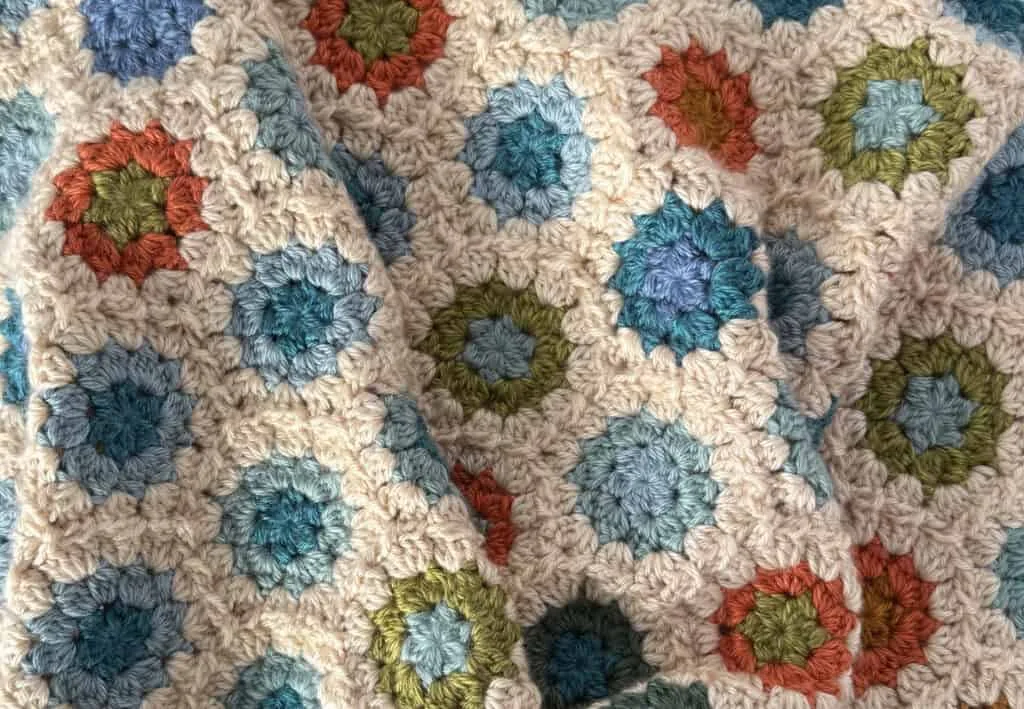
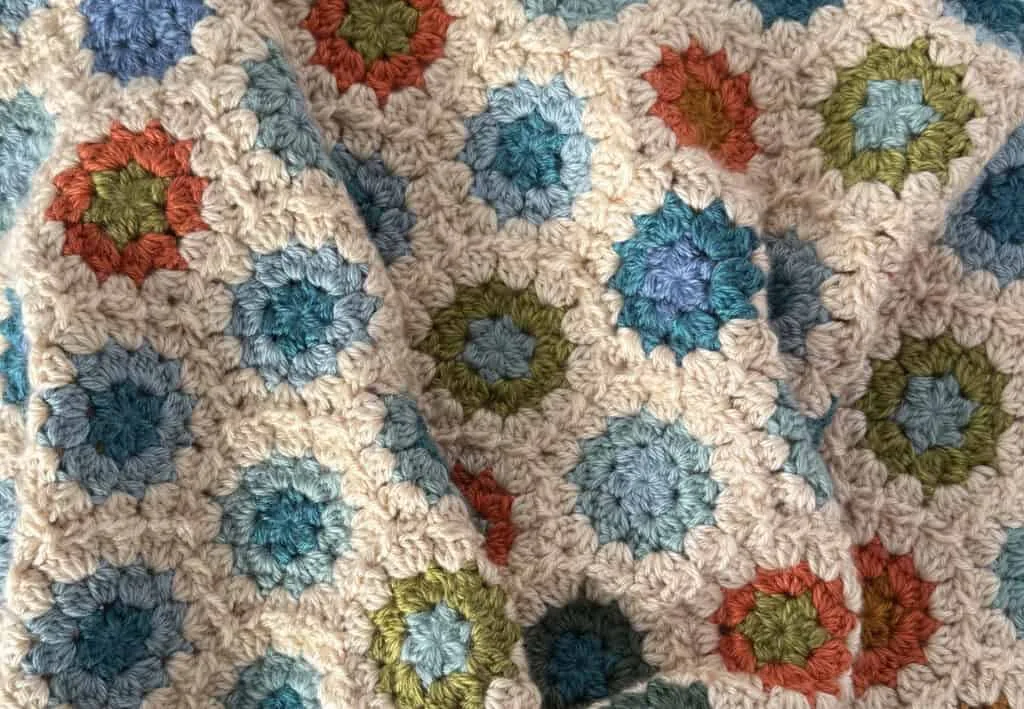
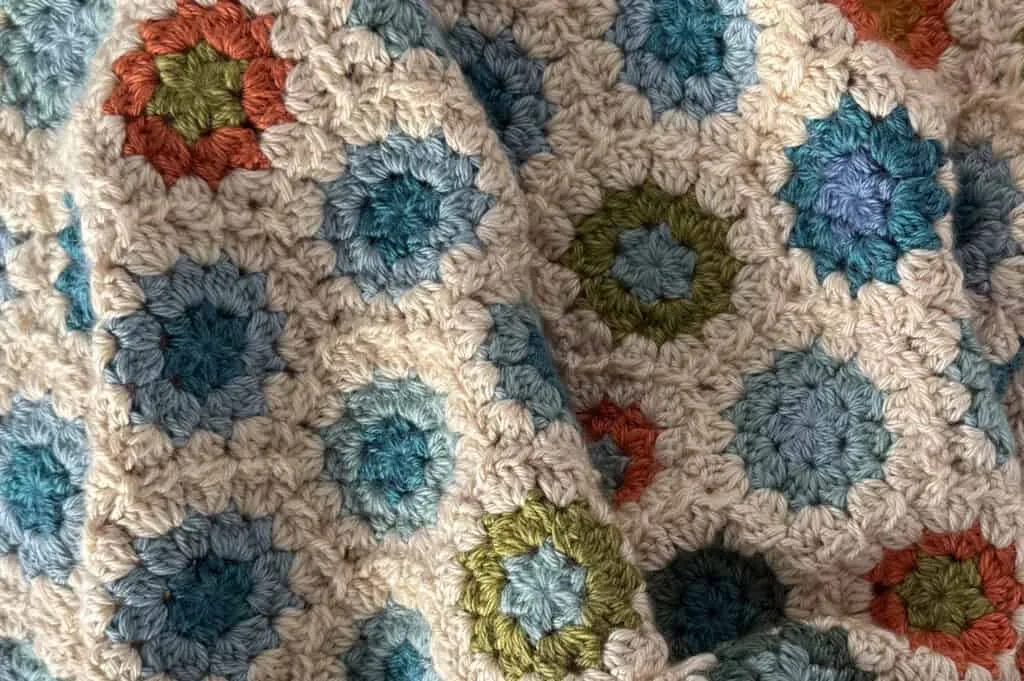
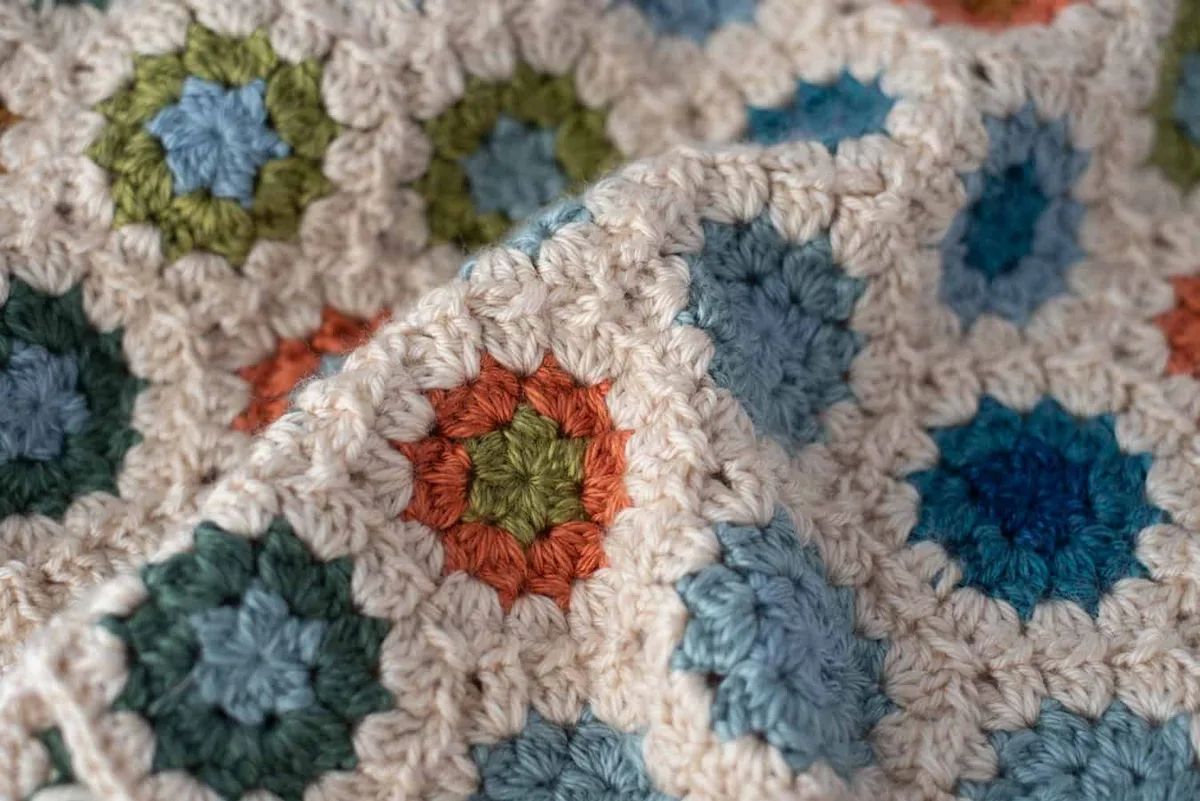
Finished, this is a generous throw-sized afghan with a wonderfully clever silhouette: the half-hexagon rows give you straight edges across the top and bottom, while the sides ripple into soft, natural scallops. The cluster stitches create a plush, quilted texture with real weight and drape, and the ivory Acadia background makes all twelve temperature colors — each named for a US national park — glow like stained glass. As a gift, it's unmatched: a blanket that literally holds a year of someone's life, stitch by stitch and day by day
Variations
I've made a few temperature blankets over the years, and this hexagon version is hands-down my favorite way to record a year in yarn. The math won me over first: the 365-day layout uses exactly 365 motifs and the leap-year layout exactly 366, so there are no awkward filler pieces at the edges — every single hexagon is a real day. The cluster stitches are the second thing I adore. Those plump 2dcc and 3dcc clusters give each motif a puffy, quilted texture that plain double crochet just can't match, and once your hands learn the rhythm you can finish a hexagon before your coffee goes cold. The join-as-you-go method means there's no mountain of loose motifs waiting to be seamed in December, which is honestly the thing that kills most temperature blankets. And watching the color story build week by week — a warm snap here, a cold front there, the slow slide into autumn — turns checking the thermometer into the best part of my morning. It's part blanket, part diary, and completely addictive
Common mistakes
- Pulling through all the loops too early
- Count loops before the final pull-through: a 2dcc should have 3 loops on your hook and a 3dcc should have 4 before you yarn over and close them all at once. If your hexagons look flat or lacy instead of plump, you're likely completing each leg like a normal double crochet — leave the last loop of every leg on the hook
- Starting the first row with full
- The very first row and the very last row use the two-round half hexagon — that's what creates the straight top and bottom edges. If you begin with full hexagons you'll end up with a zigzag edge on all four sides and no clean place to finish. Double-check your chosen layout before joining anything
- Joining motifs out of order with the join-as-you-go method
- This blanket is assembled strictly from the top down and left to right. Jumping ahead to a hexagon elsewhere in the layout leaves you with corners you can't join into cleanly and a fabric that ripples. If you want to crochet ahead, make the two-round center circles in advance and only add the joining round in calendar order
- Buying equal amounts of every temperature color up front
- Your climate decides your palette usage — a mild coastal year might burn through three skeins of one middle-range color and barely touch the extremes. Start with one skein per color as the materials list suggests, track usage monthly, and restock the workhorses. Only the ivory is predictable at roughly 2,380 yards
- Crocheting the cluster rounds so
- The two-round inner circle should measure about 2.25 inches across. Gauge isn't imperative here, but consistency is — if some centers are 2.25 inches and others are 3 inches, the hexagons won't join flat. Check your first few motifs and settle into one tension before you're fifty days deep
- Falling behind on days and losing track of where you are
- Keep a simple written temperature log the moment you check the weather, and clip a stitch marker to the first hexagon of each month and the start of your current row. When life happens and you skip a week, the log plus markers let you batch seven motifs without ever guessing which day you're on
Intermediate
Materials
- Lion Brand Heartland, size 4 worsted weight, 100% acrylic, 251 yds/230m per 5oz/142g skein
- 9.5 Skeins Acadia (Ivory) [approximately 2,380 yards total]
- 1 or more skeins for each color. Quantity needed will vary based on weather (See planning your afghan section). I used the following colors: Olympic, Carlsbad Caverns, Glacier Bay, Voyageurs, Congaree, Rocky Mountains, Haleakala, Bryce Canyon, Gateway Arch, Yosemite, Badlands and New River Gorge.
- US G+7/4.50 mm crochet hook
- Stitch markers to keep track of rows
- Tapestry needle and scissors
Crochet Hexagon
Special note: It’s a good idea to make a practice hexagon of the 3 full rounds so you understand the process before moving on to working half hexagons or the join-as-you-go process. Technically the only time you are working a full 3-round hexagon without joining to anything is the first hexagon of row 2. This would be day 9 in a 365-day year or day 10 in a 366-day leap year. If you know the temperatures for that day, go ahead and make your practice hexagon in those colors. Otherwise, just make a practice hexagon so you understand the process.
Each hexagon starts as a 2-round motif. Round one is for the low temperature of the day and round two is for the high temperature of the day; round 3 is worked in the main background color. Alternatively, you may choose to only record one temperature (usually the high temperature) each day, and thus both round 1 and round 2 would be worked in the same color.
With first color, make a magic ring
- Round 1Work all in the magic ring: Ch 2, (2dcc, ch 1), [(3dcc, ch 1)] 5 times. Sl st to top of starting ch-2 to join. Fasten off 1st color. (6 clusters)
- Round 2With 2nd color, sl st to a ch-1 space, then ch 2, (2dcc, ch 2, 3dcc, ch 2) in the same space, (3dcc, ch 2, 3dcc, ch 2) in each remaining ch-1 space around. Sl st to top of starting ch-2 to join. Fasten off. (6 sets of 2 clusters)Reminder: Round 3 is worked as written for the first full hexagon in row 2 of the blanket. However, the instructions still apply when joining as you go; you’ll just be incorporating the joining as part of round 3.
- Round 3With main yarn color, sl st to a ch-1 space (this will be between a cluster set), then [ch 3 (counts as a dc), dc, ch 2, 2dc (corner made)] in same sp as join, 3dc in next space, *(2dc, ch 2, 2dc) in next space, 3dc in next space. Repeat from * around. Join with slip stitch to top of starting ch-3. Fasten off, leaving a long strand for joining.
Crochet Half Hexagon
With first color, make a magic ring
- Round 1Work all in the magic ring: Ch 4, [(3dcc, ch 1)] 3 times, then dc. Do not join. Pull magic ring closed but keep work in a half circle/crescent shape. Fasten off. (6 clusters)
- Round 2Join color 2 to the space between the ch-4 and first 3dcc of the prior row. Then, (ch 3, dc, ch 2) in same space, (3dcc, ch 2, 3dcc, ch 2) in each of the next 2 ch-1 spaces, then work 2dc in the last ch-1 space. Fasten off.
Assembly
- BorderBorder: For my afghan, I decided to leave it as is, with NO border. Here’s why: I really like the look of the scalloped side edges that form as the hexagons are joined. I also like the half hexagons at the top and I felt that a row of the cream color on top of that would disrupt that. However, you may feel differently. If you’d like a border, here are a few tips: If you’d like to work a row or two of single crochet around, take care to evenly space single crochet stitches across the top and bottom of your blanket, checking every few stitches to make sure the blanket is not ruffling from too many stitches or pulling in from too few stitches. On the scalloped edge, work 2 stitches into each hexagon point and decrease 2 stitches over every spot where the 2 hexagons meet. If you do decide to do a border, you will need additional yarn as that is not included in the materials given.
Important notes
💡 Pick your layout before you chain a single stitch: the pattern includes an exact 365-motif layout and an exact 366-motif leap-year layout, and they are not interchangeable partway through. Check whether your chosen year is a leap year first
💡 Make a physical color key on day one — tape a short snippet of each yarn next to its temperature range on an index card and keep it in your project bag. Ball bands disappear long before December does
💡 The ivory background (Heartland in Acadia) needs about 2,380 yards — roughly 9.5 skeins. And don't stress about over-buying the temperature colors up front: because the blanket is worked in separate hexagon motifs, a dye lot difference will not be noticeable if you need to purchase an additional skein of a color later in the year
💡 Use your stitch markers strategically: one on the first hexagon of every month and one marking the start of the row you're currently joining. Since assembly runs top down and left to right, these two markers are all you need to find your place after any break
💡 Batch your work: jot the temperature down daily, then crochet weekly. Work all seven two-round center circles in one sitting, then add the final cluster round and join each hexagon in calendar order. It keeps the join-as-you-go sequence intact while fitting real life
💡 Remember the half hexagons are only two rounds, not three. When you're in the rhythm of full hexagons it's easy to add a third round on autopilot — and a full-size motif in the top or bottom row will bulge out of your straight edge
💡 Gauge and finished size: the inner circle (rounds 1-2) of the hexagon measures 2.25 inches in diameter, but gauge is not imperative in this pattern — a slightly thicker worsted weight yarn may simply measure a touch bigger. Your circle motifs may not all match each other exactly, and that's ok; the pattern is very forgiving of these slight variances. The finished afghan measures 49 x 64 inches — a throw sized perfectly for your couch
💡 Start by creating a temperature chart. This blanket maps temperatures in increments of 10 degrees Fahrenheit — everything lower than 0 degrees shares the coldest color and everything higher than 100 degrees the hottest — for 12 colorways in total. Depending on your year and climate, some colors may never get used at all: a year that never hits 100 degrees never touches the hottest skein, and that's fine
💡 Using a different yarn or an unusual gauge? Before buying all your background yarn, work a test hexagon: leave a 6-inch tail before starting round 3 and another 6-inch tail at the end, then unravel the yarn used for round 3 and measure it. Multiply that length by 365 (or 366) days, add a little extra for error, and purchase that quantity of your background color
More photos
FAQ
What happens if I miss recording a few days of temperatures?
Nothing is lost — historical weather data for your city is easy to look up online for any date; is an excellent resource because it lets you go back to earlier dates for each day's high and low. Many makers actually prefer working a week or a month behind, batching motifs from their temperature log rather than crocheting daily
Do I have to start on January 1?
Not at all. The pattern explicitly supports milestone years, so you can begin on a birth date, wedding date, or retirement day and run 365 or 366 consecutive days from there. The layouts work identically no matter which date is day one
How much yarn do I need of each temperature color?
It genuinely depends on your climate, which is why the pattern includes a planning section — a mild year concentrates yardage in the middle ranges while a dramatic year spreads it out. Start with one skein per color and buy more as your weather dictates. Only the ivory background is fixed at about 2,380 yards
Can I substitute a different worsted weight yarn?
Yes — the pattern notes that gauge is not imperative, so any size 4 worsted works with the 4.5 mm hook. A slightly thicker worsted will make each 2.25-inch center circle a touch bigger and the finished throw slightly larger overall. Just keep your tension consistent so all the hexagons match each other
Why does this pattern include half hexagons?
The two-round half hexagons form the very first and very last rows of the blanket. They fill in the zigzag that full hexagons would leave, giving you straight edges across the top and bottom while the sides keep their pretty scalloped shape. There are no other filler motifs anywhere in the layout
Made your own square?
This site belongs to every crocheter. Share your design with the world — we’ll math-check the counts, polish it up, and publish it free for everyone, credited to you.
🧵 Share your pattern →
0 / 0 rounds